What Miso should help with before dinner starts
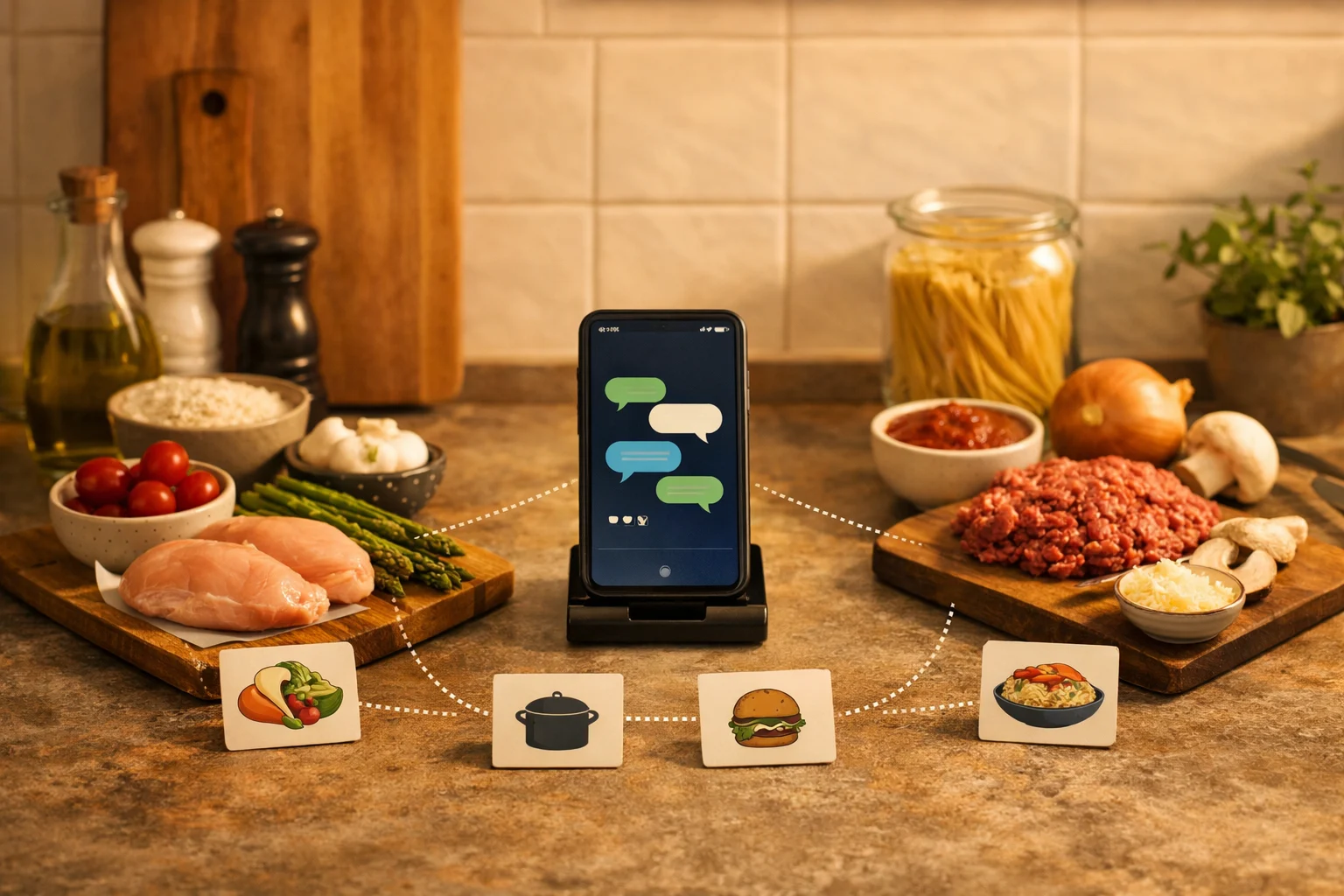
Miso works best when it helps with the decisions around cooking: narrowing choices, adapting plans, and translating preferences into usable next steps.
By ByteRecipes Team
Key takeaways
- Ask Miso for tradeoffs and constraints, not only recipe names.
- Use pantry notes and schedule context to get more practical suggestions.
- Account or planner changes should stay confirmed and explainable.
The useful work happens before the pan is hot
People often imagine an AI cooking assistant as something that answers questions mid-recipe. That can help, but the larger opportunity is earlier. Before dinner starts, there are decisions about time, ingredients, preferences, leftovers, and effort.
Miso is most useful when it turns that messy context into a next step: a shortlist of meals, a swap for a planned recipe, a grocery adjustment, or a simpler version of something already saved.
Better prompts create better planning
A broad request like 'what should I cook?' leaves too much room for generic answers. A useful request includes constraints: what is in the pantry, how much time you have, who is eating, what needs to be avoided, and whether leftovers are helpful.
That kind of prompt makes the assistant less like a novelty and more like a planning partner.
- Ask for three options ranked by effort.
- Name the ingredients you want to use up.
- Ask what grocery items would unlock the most meals.
Control matters
Suggestions are not the same as account changes. When Miso proposes a planner update, grocery edit, or preference change, the user should be able to confirm the action. A good assistant explains what it noticed and what it plans to do.
That keeps the product predictable. Help should reduce mental load without making the workspace feel automatic in the wrong way.
Three Miso prompts worth trying
- 1Given these ingredients, suggest three dinners under 35 minutes and explain the tradeoff for each.
- 2Look at my planned meals and suggest one lower-effort swap for the busiest night.
- 3Turn these saved recipes into a two-night plan with overlapping groceries.
Helpful reminder
ByteRecipes articles are written for product education and everyday cooking workflows. They are not medical, nutrition, allergy, or food-safety advice.
Keep reading
Related articles
Spring planning updates: staged picks, cleaner moves, and calmer weeks
A closer look at the planner changes that make it easier to keep recipe ideas nearby, move meals between days, and recover gracefully when plans change.
Read next
Designing for recipe quality, not recipe volume
More recipes are only useful when they are reliable. This note explains why ByteRecipes emphasizes clearer images, timing sanity, and moderation tools.
Read next
Product note: clearer recipe pages for faster cooking
Recipe pages were tuned around the moment you are ready to cook: stronger hero sections, cleaner timing details, and faster access to planning actions.
Read next