What belongs in a useful grocery list
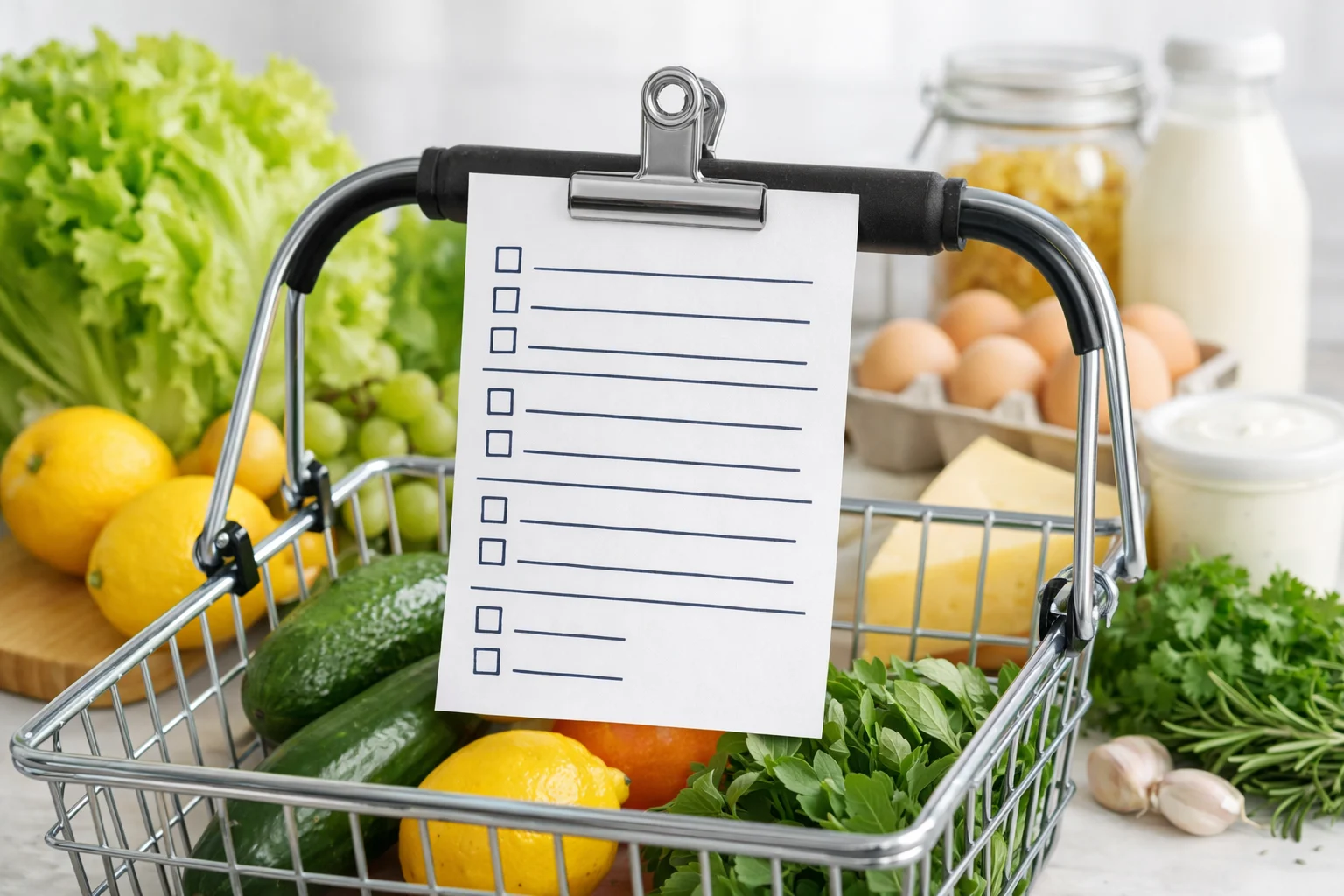
A useful grocery list is specific enough to shop from, flexible enough to edit, and connected to the meals that created it.
By ByteRecipes Team
Key takeaways
- A grocery list needs both recipe context and manual flexibility.
- Grouping by how people shop is more useful than preserving recipe order.
- The list should make it easy to remove what you already have.
Specific beats clever
A grocery list does not need to be impressive. It needs to help someone shop. That means ingredients should be specific enough to recognize, grouped in a practical way, and editable when the real store or kitchen does not match the plan.
The best list reduces questions at the store. What is this for? Do I already have it? Can I skip it? Which section should I find it in?
Recipe context matters
When ingredients come from planned meals, it helps to know which meal created the item. That context makes substitutions easier and prevents accidental removals.
At the same time, the list cannot be limited to recipe ingredients. People need to add staples, snacks, household items, and one-off notes.
- Connect generated items back to planned meals.
- Keep manual items easy to add and edit.
- Group items by store flow when possible.
Review before shopping
The grocery list should be reviewed after the plan is mostly set. If you review too early, the list changes. If you review too late, you buy ingredients for meals you may not cook.
That review is where the product can save real time: remove what you have, confirm what you need, and keep the list tied to the meals that matter.
Grocery list checklist
- 1Confirm the planned meals.
- 2Remove pantry items you already have.
- 3Add household and staple items manually.
- 4Group the list before shopping.
- 5Keep the list editable until checkout.
Helpful reminder
ByteRecipes articles are written for product education and everyday cooking workflows. They are not medical, nutrition, allergy, or food-safety advice.
Keep reading
Related articles
How to build a flexible dinner plan without locking every meal
A practical workflow for planning just enough: choose anchors, leave room for leftovers, and keep a short list of recipes ready for the days that shift.
Read next
A better way to use saved recipes
Saved recipes should be more than a pile of bookmarks. Here is a simple pattern for turning saved recipes into a weekly shortlist you actually cook.
Read next
A pantry-first way to choose what to cook
Start from what is already in the kitchen, then choose recipes that use those ingredients before buying a completely new set of groceries.
Read next