How to choose recipes for a shared planner
Shared planning works best when everyone can see the same week, but the plan still has a clear owner, a short candidate list, and room for swaps.
By ByteRecipes Team

Key takeaways
- Shared access works best with clear ownership.
- Suggestions should be staged before they become commitments.
- Permissions reduce accidental changes and social friction.
Use staged picks for suggestions
Suggestions are valuable, but they should not instantly become scheduled meals. Staged picks give a household a place to collect ideas before assigning days.
That keeps the calendar from changing every time someone finds a recipe that looks good.
- Agree on must-cook meals first.
- Stage suggestions before adding them to a day.
- Use swaps when the plan changes instead of deleting context.
Plan for preferences out loud
Shared planning works better when preferences are visible. If someone needs a vegetarian night, dislikes a spice level, or needs leftovers for lunch, those constraints should guide the plan before shopping.
The product can help, but the household still benefits from a short conversation about what matters that week.
Shared planner habit
- 1Name the planner owner for the week.
- 2Let others add staged suggestions.
- 3Choose meals after checking schedule and preferences.
- 4Confirm grocery-impacting changes before shopping.
Helpful reminder
ByteRecipes articles are written for product education and everyday cooking workflows. They are not medical, nutrition, allergy, or food-safety advice.
Keep reading
Related articles
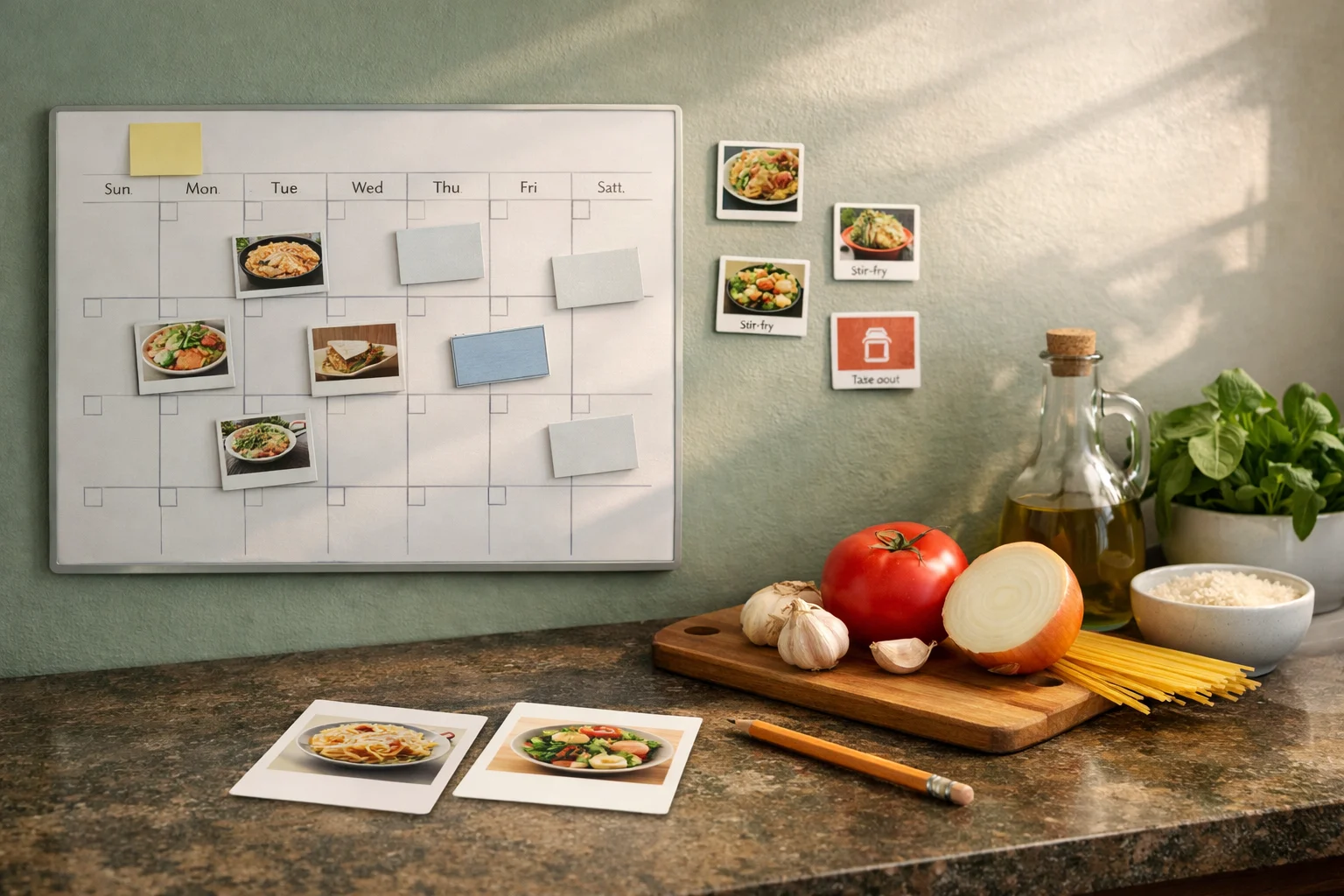
How to build a flexible dinner plan without locking every meal
A practical workflow for planning just enough: choose anchors, leave room for leftovers, and keep a short list of recipes ready for the days that shift.
Read next
A better way to use saved recipes
Saved recipes should be more than a pile of bookmarks. Here is a simple pattern for turning saved recipes into a weekly shortlist you actually cook.
Read next
A pantry-first way to choose what to cook
Start from what is already in the kitchen, then choose recipes that use those ingredients before buying a completely new set of groceries.
Read next